Hiking Near Seoul: Easy and Moderate City Trails
- Area
- Travel
- Filed
- Length
- 5 min
In this page (6)
- The main city trails at a glance
- How Seoul hikers dress and pack
- Trail etiquette
- Reaching the trailheads by subway
- Staying safe on the mountain
- The post-hike meal and the evening after
Seoul is one of the few capital cities where you can step off a subway train and be on a forested mountain path a short walk later. For visitors and newcomers, the easiest places to start are Namsan and Inwangsan in the city centre, Achasan in the east, and the gentler routes of Gwanaksan and Bukhansan National Park for a longer, more demanding day. None of them requires technical skills, but each rewards a little preparation: the right shoes, enough water, an early start and a clear idea of which marked trail you are following.
The main city trails at a glance
Each of these mountains has a different character, and picking the right one depends on how much effort you want to put in and what you hope to see from the top.
Namsan: the gentle introduction
Namsan rises in the middle of the city and is crossed by paved walking paths and stairways as well as quieter forest trails. It is the natural first outing for anyone unsure of their fitness, because you are never far from a road or a bus stop. The summit area, with the tower and the old beacon mounds, gives a wide view over the city in every direction.
Inwangsan: rock, city wall and skyline
Inwangsan sits just west of the old palace district. Much of the route follows the restored Seoul city wall. Expect stone steps and some exposed granite near the top. The reward is one of the most photographed views of the downtown skyline, with the palaces and the northern mountains framing it.
Achasan: an easy ridge in the east
Achasan is a low, friendly ridge on the eastern side of the city, above the Han River. Its trails are broad and well used. Local walkers like it for early mornings, because the open slopes face the river and catch the first light.
Gwanaksan: a step up in the south
Gwanaksan, on the southern edge of the city, is rockier and steeper than the central hills. Several routes start near university campuses and residential districts, and some sections involve scrambling over boulders with the help of ropes or railings. It suits hikers who have already done one or two easy outings and want something more demanding.
Bukhansan: the big one
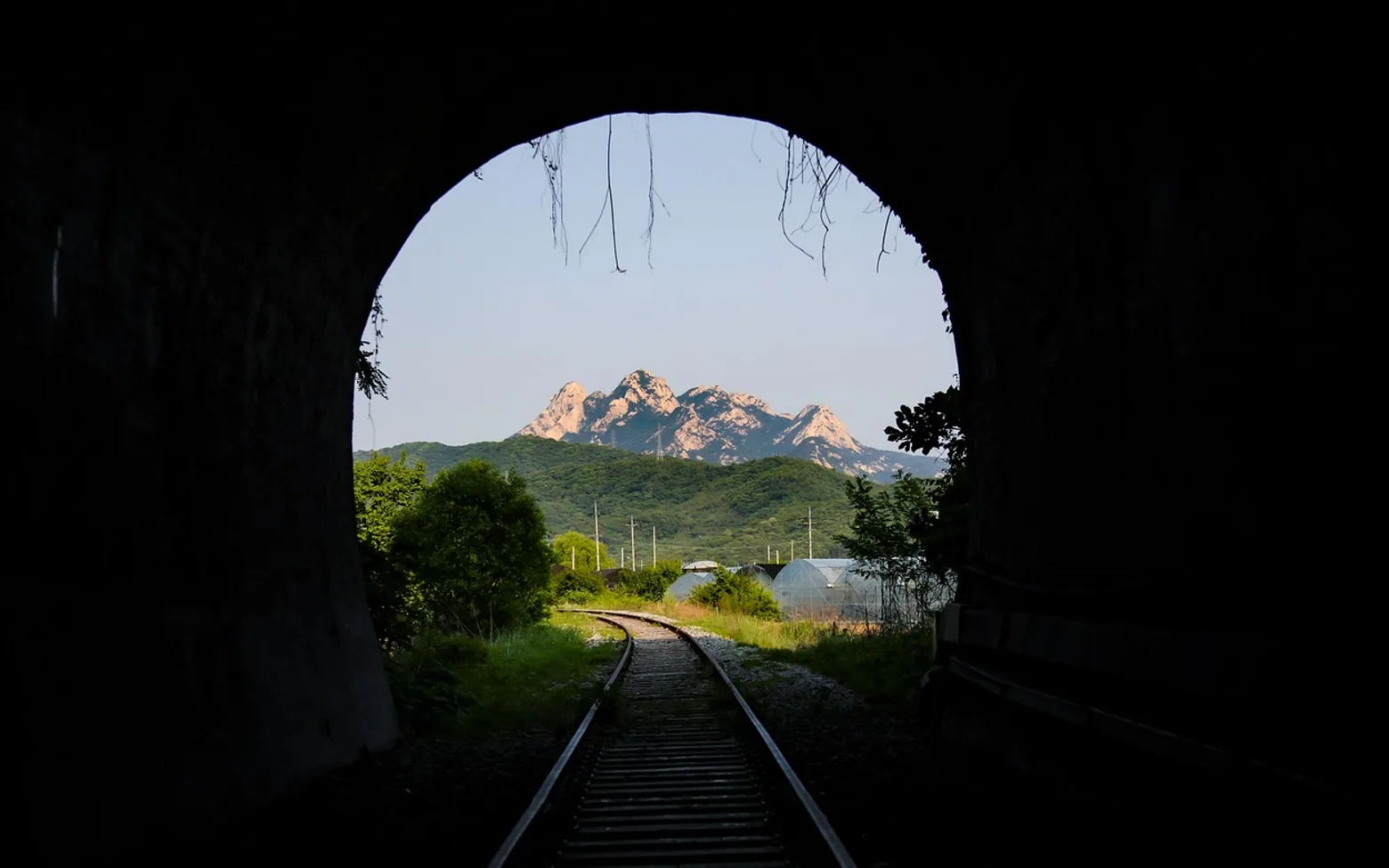
Bukhansan National Park fills the northern horizon with granite peaks. The park has many entrances and a dense network of marked trails, from valley walks along streams to steep routes that end on bare rock summits. Beginners should choose a valley or lower-ridge route and save the high peaks for a later visit with more experience.
How Seoul hikers dress and pack
First-time visitors are often surprised by how well equipped local hikers are, even on short city trails. The logic is sound: weather on exposed ridges changes faster than in the streets below. A sensible kit includes:
- shoes with a firm grip, since granite slabs become slippery after rain or in autumn leaves;
- light layers you can add or remove, plus a windproof jacket for the summit;
- plenty of water and a few snacks, such as fruit, nuts or rice rolls;
- a hat and sunscreen in warm months, gloves in cold ones;
- a charged phone with an offline map, and a small amount of cash.
Phone cameras do the rest: the same principles behind taking good photos with a phone, especially soft light and a steady hand, apply to a misty ridge as much as to anything else.
Trail etiquette
Korean trails are sociable places, and a few habits keep them pleasant for everyone. Keep to the right on narrow sections and give way to people coming uphill. Carry all rubbish back down, because bins are rare on the mountains. Stay on marked paths, which protects the slopes from erosion, and respect closed sections, which are usually closed for restoration or safety reasons.
Reaching the trailheads by subway
Most trailheads around Seoul are reachable by subway, sometimes followed by a short bus ride or a walk through a residential lane. On weekend mornings you will spot the hiking crowd on the trains, which is often the easiest way to confirm you are heading the right way. Before setting out, check which station serves your chosen entrance, and decide in advance whether you will return the same way or descend to a different side of the mountain.
Staying safe on the mountain
City mountains feel tame, but a few rules cover most risks:
- Check the weather before you leave. Rain makes rock slippery, summer heat drains energy quickly, and winter can bring ice on shaded steps.
- Respect the daylight. Start early, and turn around in good time so you are off the trail before dusk.
- Stay on marked trails. Shortcuts and unofficial paths are where people get lost or injured.
- Tell someone your plan. Share your route and expected return with a friend, especially when hiking alone.
- Know your limits. Turning back early is always the right call if you feel unwell or the route looks harder than expected.
The post-hike meal and the evening after
A day on the mountain in Korea rarely ends at the trailhead. Small restaurants near the main entrances serve hearty food to tired hikers, with savoury pancakes, noodle dishes and stews among the classics. Many groups share a bottle of makgeolli, the milky rice wine closely tied to hiking culture. If you drink, keep it moderate, and never drive afterwards.
Back in the city, the evening often continues with a group outing to a noraebang, the private karaoke rooms found in almost every neighbourhood. Southern districts such as Gangnam have many of them, and for planning a group visit there, the Karaoke of Gangnam Guide is a straightforward place to start reading. Singing badly together is very much part of the fun.
If you are new to the city, hiking is also one of the easiest ways to meet people. Many of the ideas in our article on simple ways to meet friends on the road work just as well on a mountain path.
Which trail should a first-time visitor choose?
Start with Namsan or Inwangsan. Both are central, well marked and short enough to fit into half a day.
Is it fine to hike alone?
On busy, well-marked city routes in daylight, many people do. Stick to popular trails, carry a charged phone, let someone know your plan, and choose a group outing for the more demanding mountains until you know them well.